
Walking Alongside Others: A Mother’s Mission
Driven by love for her daughter Maija and years of professional service, Libby Makela-Johnson found in TriCircle a place where personal loss and purposeful compassion meet.
The path to TriCircle often begins in a quiet, unexpected moment. For Libby, it started on the New Haven Green during International Overdose Awareness Day, where she met founder and executive director Ana Gopoian while volunteering side by side. “I began to run into Ana at other events focused on addiction and recovery,” she recalls — and each encounter deepened a connection she now treasures.
She knows loss intimately. Her daughter Maija struggled with substance use disorder and ultimately died of an overdose — a grief no parent should carry, yet one shared by far too many families. Through TriCircle, she found a way to honor Maija’s memory in a tangible, tender way: sewing a quilt square in her daughter’s name. “One of the most touching things I have participated in through TriCircle,” she says simply.
Recovery and Healing Are Rarely Accomplished Alone. Connection Is Essential.
As both a grieving mother and a seasoned professional in workforce development, case management, and reentry services, she understands the maze that families face when a loved one struggles with addiction — the waiting lists, the fragmented systems, the desperate search for the right level of care at exactly the right moment. “At times it felt difficult to identify the right support quickly when it was needed most,” she reflects. What cut through that overwhelm, she says, were the people who simply showed up with empathy: “Professionals, peers, and community members who treated our family with compassion helped us feel less isolated and reminded us that we were not alone.”
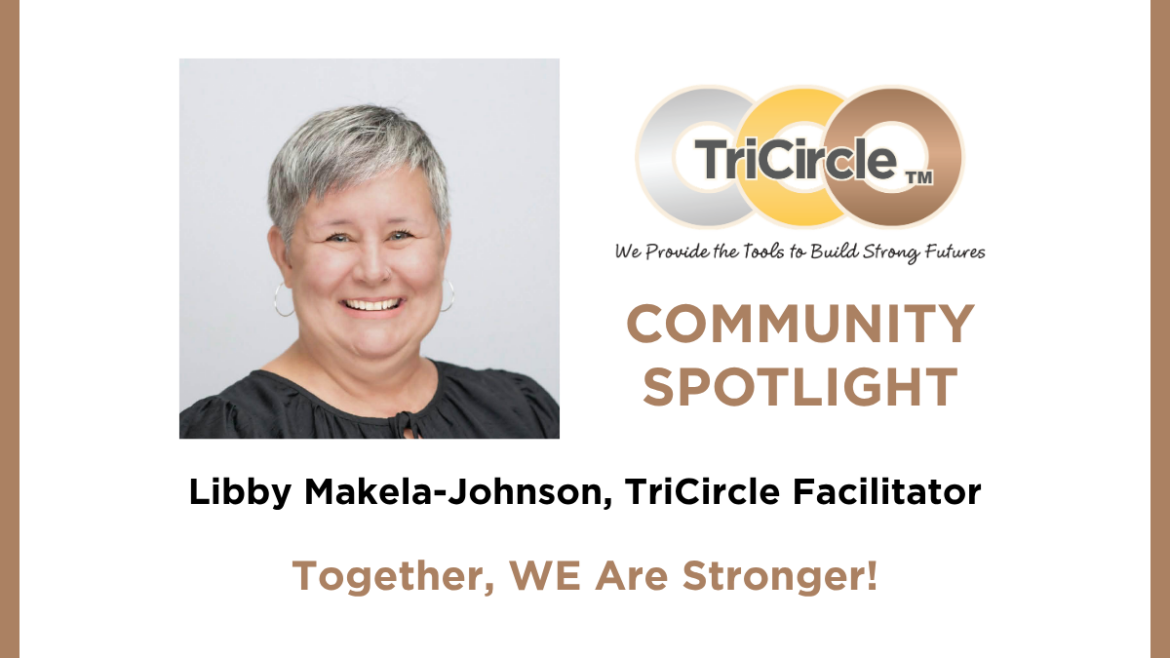
That experience has shaped everything about how she now shows up for others. As TriCircle’s newest Hope After Loss Group facilitator, Libby meets people where they are, listens without judgment, and connects them to resources that support long-term stability and self-sufficiency. She brings the same warmth to TriCircle — a community she was drawn to precisely because of its peer-centered, stigma-free approach. “Their commitment to supporting individuals and families affected by addiction aligns deeply with my personal and professional values,” she says.
Maija’s loss, she says, continues to be her motivation. It is not a wound that drives her away from the work — it is one that draws her deeper into it, into the circle of people who understand that hope, connection, and compassion are not small things – they are everything.
About Libby Makela-Johnson
Libby earned a Bachelor’s degree in African Languages and Literature from the University of Wisconsin-Madison in 1992. She brings years of experience in case management, workforce development, education, and trauma-informed support to her role as a Hope After Loss facilitator in the TriCircle community. She is skilled at helping individuals identify strengths, navigate systems, and build pathways toward stability — and she brings to that work the hard-won wisdom of a mother who loved her daughter deeply.